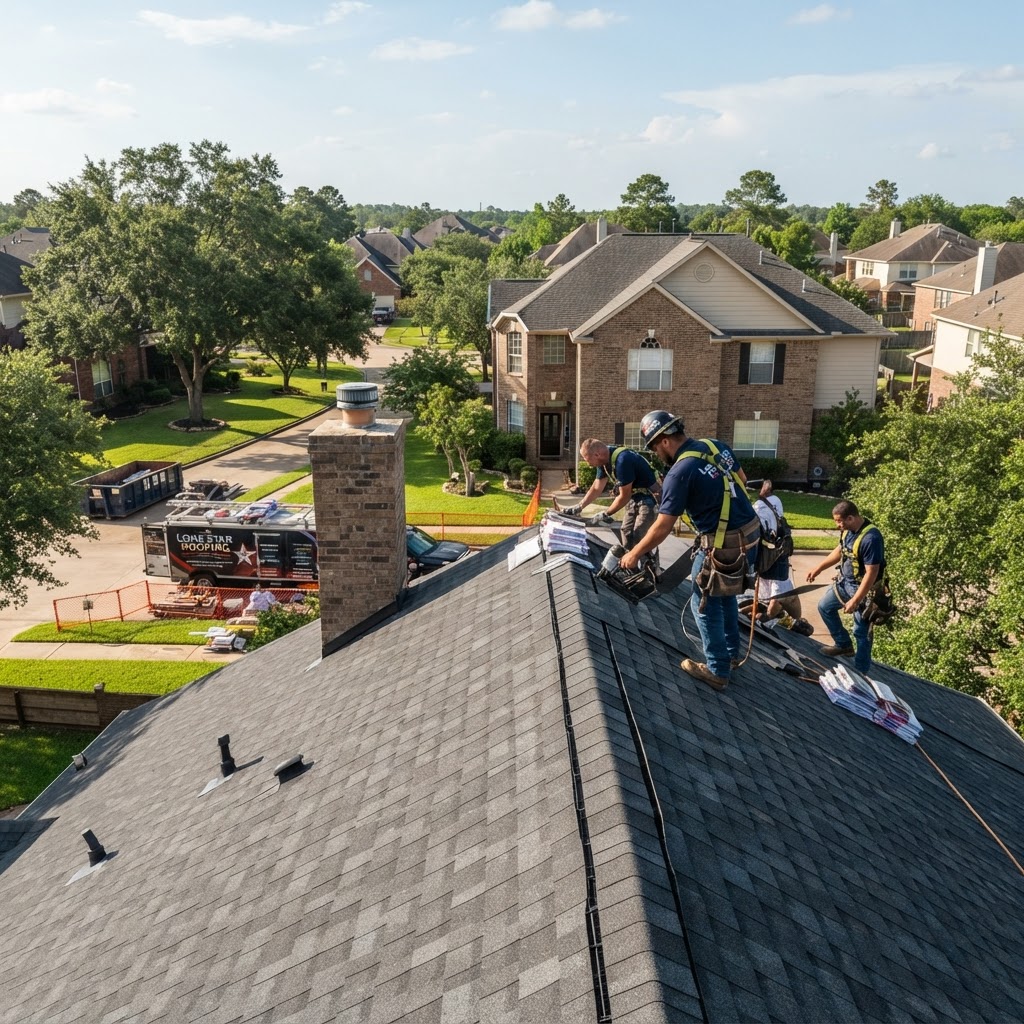
Repair vs. Replace After a Tomball Hailstorm: How to Make the Right Call Before Your Insurance Adjuster Does
After a hailstorm rolls through Tomball, the pressure to act fast is real — and so is the risk of making the wrong call. Here's how an experienced Texas roofer reads storm damage to decide between repair and full replacement, and why that decision matters more than most homeowners realize.
The 48-Hour Window Nobody Talks About
Every spring and early fall, the same pattern plays out across northwest Harris County. A pop-up supercell drops golf ball-sized hail on Tomball, Spring, and Cypress — sometimes only a quarter-mile wide — and by the next morning, door-to-door storm chasers are already working the neighborhoods. Your phone is ringing. Your neighbor just signed with some out-of-state crew. And you're standing in your driveway staring at dented gutters wondering: do I actually need a new roof?
The honest answer isn't simple. But after 20+ years of climbing roofs across the Texas Triangle, I can tell you this: the repair-vs.-replace decision is the single most consequential call in the entire storm-damage process, and most homeowners let their insurance adjuster make it for them — without realizing that adjusters aren't always trained to identify all the damage that matters.
Let's break this down properly.
What Hail Actually Does to a Shingle (It's Not What You Think)
Most people assume hail damage means visible holes or missing shingles. That's not how it works, and this is the insight that changes everything.
Modern asphalt shingles — like the GAF Timberline HDZ or Owens Corning Duration — have a granule surface that protects the asphalt mat underneath from UV degradation. When a hailstone strikes, it doesn't necessarily punch through. What it does is knock granules loose from the mat, exposing the asphalt beneath. You can't always see this from the ground. Sometimes you can barely see it from the roof without getting on your hands and knees.
Here's the problem: once that mat is exposed to Texas sun — and we're talking sustained summer temperatures that push 160°F on a dark shingle surface — UV breakdown accelerates dramatically. A shingle that might have lasted another 12 years with its granules intact could fail in 3–5 years after a significant hail event. That's not a repair situation. That's a replacement situation, even if it doesn't look catastrophic today.
The test we use in the field: On a properly struck shingle, you'll see a soft, spongey depression (called bruising) when you press the center of the impact zone. The mat underneath has been fractured. That shingle is compromised regardless of how it photographs for an insurance claim.
Factors That Push the Decision Toward Replacement
Not every hailstorm justifies a full replacement. Here are the factors we weigh on every Tomball inspection:
1. Hail size and density Hail under 1 inch rarely causes functional damage to shingles less than 8–10 years old. Hail 1.5 inches or larger is almost always a replacement conversation. The April 2024 storms that tracked through the Tomball/Pinehurst corridor dropped stones measured at 1.75–2.25 inches — nearly every roof in the impact zone qualified for replacement under standard insurance policy language.
2. Shingle age and existing condition A 6-year-old GAF Timberline HD with 60% remaining granule coverage can absorb moderate hail and still protect your home. A 14-year-old 3-tab shingle that's already chalking and curling at the edges? Even marginal hail is the final insult. We've pulled back ridge caps on roofs in older Tomball subdivisions — neighborhoods built out in the early 2000s along FM 2920 — and found dried, brittle mats that should've been replaced regardless of the storm.
3. Hit count per 10-square area Insurance adjusters use a threshold, typically 6–8 functional hits per 10-square section (a 10x10 foot area), to justify replacement. We document every hit. If your adjuster is only counting obvious impacts and missing the bruised ones, you could be undercompensated. This matters.
4. Flashing and penetration damage Hail doesn't just hit the flat field of your roof. It hammers pipe boots, ridge vents, skylight frames, and step flashing. Tomball homes also deal with a specific Texas challenge: our expansive clay soils cause foundation movement that stresses flashing joints over time. Add a hailstorm's impact to flashing that's already been worked loose by seasonal soil shift, and you've got a leak waiting to happen — one that a simple shingle repair won't fix.
5. Ventilation and decking condition This one surprises homeowners. If your attic has been running hot for years — and in Tomball's humidity, inadequate soffit-to-ridge ventilation is extremely common — your decking boards may have experienced moisture cycling that's left them soft or delaminated. If we're tearing off shingles for a repair and find soft decking, we're replacing boards. At that point, the economics of a full replacement often make more sense.
When Repair Is the Right Call
Repair is legitimate in specific circumstances:
- Isolated mechanical damage: A fallen tree limb punched through 3 shingles on an otherwise undamaged 4-year-old roof. Repair those 3 shingles and the decking underneath.
- Wind damage without hail: Missing shingles from straight-line winds on a newer roof with no hail history often warrant repair, not replacement.
- Flashing-only failures: If your leak is coming from a failed pipe boot or deteriorated step flashing and the shingle field is sound, a targeted flashing repair is the right move. Don't let anyone sell you a new roof to fix a $400 flashing problem.
- Small hail, young roof: 3/4-inch hail on a GAF Timberline HDZ installed in 2023? Check it thoroughly, document it, but you're likely fine.
The Insurance Layer: Why Your Decision Matters Before the Adjuster Arrives
Texas is an ACV vs. RCV state — meaning your policy either pays Actual Cash Value (depreciated) or Replacement Cost Value (full replacement cost, with depreciation recovered after work is complete). Most homeowners in Tomball have RCV policies, but that's worth confirming before you file.
Here's what most people don't know: if you accept a repair settlement and later discover the damage was worse than assessed, reopening the claim is difficult and sometimes impossible past the one-year filing deadline. We've seen homeowners in Harris County accept $4,000 repair checks, have that repair fail 18 months later, and then find themselves outside the claim window with no recourse.
State Farm, Allstate, and USAA all handle storm claims differently. USAA in particular has a strong reputation for fair initial assessments in our experience. State Farm has tightened their field inspection criteria significantly since 2022. Knowing this going in matters.
Get an independent inspection from a licensed contractor before your adjuster visit. Not after. If you've already had an adjuster out and you disagree with the scope, you have the right to invoke the appraisal clause in your policy — but that process goes much smoother when you have detailed, documented counter-evidence from a qualified roofer.
One Red Flag to Watch For
If a contractor tells you they can "make your deductible disappear," walk away. That's insurance fraud in Texas, and it's a felony. Legitimate contractors don't waive deductibles. The ones who do are either cutting corners on materials, labor, or both — and they won't be around when your roof fails in year three.
FairClaims Roofing & Construction has worked hundreds of storm-damage claims across Tomball and the surrounding area. We'll give you a straight assessment, help you document damage accurately, and tell you honestly if repair is the right call — even when replacement would mean more revenue for us.
Your Next Step
If your Tomball home was in the path of any storm in the last 12 months, schedule a free roof inspection before your filing window closes. Come to it prepared: pull your policy and confirm whether you have ACV or RCV coverage. Know your deductible. And if a contractor's already been out, ask them specifically: did you check for bruising on the mat, or just surface granule loss?
The answer will tell you a lot about who you're dealing with.
Need a roof inspection?
FairClaims Roofing & Construction offers free inspections across the Texas Triangle.
Click to Call