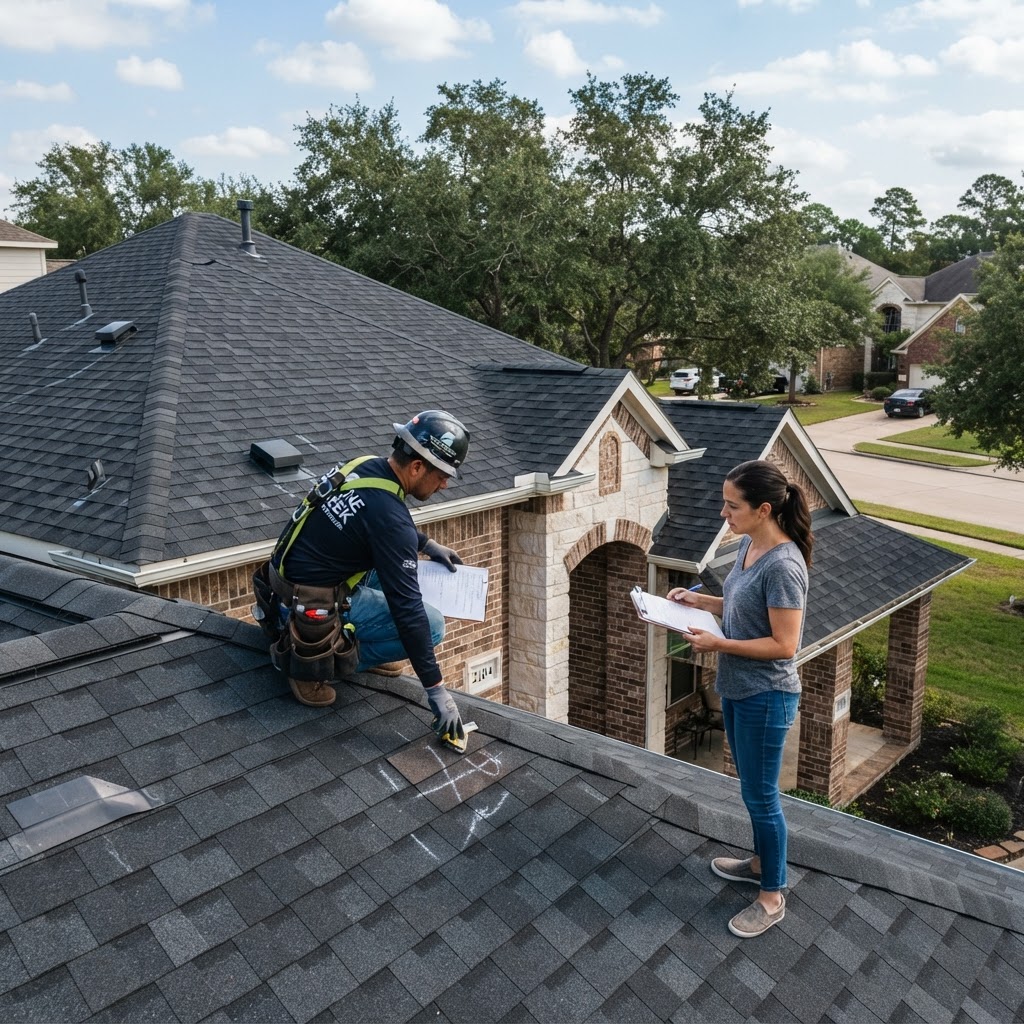
The Tomball Homeowner's Roof Insurance Claim Playbook: How to Document Damage, Work the Adjuster Process, and Avoid Getting Underpaid
After a hailstorm tears through Tomball, most homeowners leave thousands of dollars on the table during the insurance claim process. Here's exactly what to document, what adjusters are trained to look for (and sometimes overlook), and how to protect yourself from an underpaid settlement.
The Storm Is Over. Now the Real Battle Begins.
If you've lived in Tomball for more than a few years, you already know the drill. A pop-up supercell rolls through Harris or Montgomery County with little warning — sometimes in the middle of a Tuesday afternoon — and suddenly your neighborhood looks like it was hit with a bag of golf balls. Gutters are dented, skylights are cracked, and your neighbor is already on the phone with their insurance company.
Here's the thing most homeowners don't realize: the storm damage itself isn't the problem. Getting fairly compensated for it is.
After 20+ years and thousands of roofs across the Texas Triangle, we've watched good homeowners accept settlements that barely covered half their actual damage — not because of fraud or bad faith, but simply because they didn't know how to play the process correctly. This guide fixes that.
Step 1: Document Before You Touch Anything
The single biggest mistake Tomball homeowners make is cleaning up or making hasty temporary repairs before they have a thorough photo and video record. Your documentation is your evidence.
What to capture immediately after the storm:
- Date-stamped photos and video of every section of your roof (use your phone's native camera so GPS and timestamp metadata are embedded)
- Close-ups of impact marks on soft metals: gutters, downspouts, AC condenser fins, vent caps, and chimney flashing — these are your smoking gun for hail size
- Window screens (hail punches distinctive circular holes through screen mesh)
- Any damaged skylights, solar panels, or satellite dishes
- Interior water intrusion: wet insulation in the attic, stained drywall, warped ceiling boards
- Your fence, vehicles, and outdoor furniture — all corroborate the same storm hit everything
Pro tip most people miss: The AC condenser coil fins on your outdoor HVAC unit are the best independent evidence of hail size and intensity. A hailstone large enough to flatten those aluminum fins at an angle tells a very precise story about what hit your roof. Photograph them before anyone touches them — HVAC techs will sometimes straighten fins during routine service without thinking twice.
Step 2: Know What Your Adjuster Is Actually Looking For
Insurance adjusters — especially third-party CAT (catastrophe) adjusters who flood into the Houston area after major events — are often working dozens of claims simultaneously. They are not your enemy, but their job is to quantify damage to a standard, and that standard can be very conservative.
What adjusters count as legitimate hail damage on a shingle roof:
- Bruising: a soft spot in the asphalt mat where hail knocked the granules loose and compressed the fiberglass mat beneath. You find these by running your hand over the shingle and feeling for a subtle depression, often surrounded by a black or dark ring where granules are missing.
- Granule loss concentrated in circular patterns (versus weathering-related granule loss, which is diffuse)
- Cracked or split shingles with impact at the center of the crack
What adjusters frequently undercount or miss:
- Flashing damage — step flashing around chimneys, pipe boots, and dormers is commonly bent, cracked, or separated after large hail. A missed flashing repair is a future leak almost guaranteed.
- Ridge cap damage — ridge caps take a direct, perpendicular hit from hail and often show more damage than the field shingles. They're also first to fail in wind events.
- Drip edge and starter course — adjusters frequently skip these entirely. In Texas heat, a compromised drip edge leads to fascia rot faster than almost anything else.
- Decking inspection — if your roof is more than 15 years old and has been through multiple hail events, there's a real chance the OSB or plywood decking has soft spots or delamination that won't show up in a surface inspection.
A word on Xactimate: Most Texas insurers use Xactimate software to generate repair estimates. The line items in that software are updated regionally, but material and labor costs in the greater Houston area — including Tomball — frequently run higher than what Xactimate's default pricing reflects. This gap between Xactimate pricing and actual contractor costs is one of the primary reasons homeowners get underpaid. A qualified roofing contractor can provide a supplemental estimate that documents this discrepancy.
Step 3: The Adjuster Visit — What to Do (and What Not to Do)
Do be present for the inspection. Never let an adjuster on your roof without you or a roofing professional present. You have every right to have a contractor on-site during the inspection, and it changes the dynamic considerably. Adjusters are more thorough when they know someone knowledgeable is watching.
Do have your own documented damage list ready. Print out your photos. Walk the adjuster to the specific areas of concern. Point out the dented gutters, the bruised ridge caps, the bent pipe boot flashing. Don't assume they'll find everything on their own.
Don't accept the first settlement offer as final. In Texas, you have the right to dispute a claim through the appraisal process outlined in your policy — typically requiring both sides to hire independent appraisers and agree on an umpire. This process exists precisely because disagreements happen. Use it if your settlement is significantly below your contractor's documented estimate.
Don't ignore the supplement process. When a contractor begins work and finds additional damage — rotted decking, corroded flashing that wasn't visible from the surface, improper original installation that contributed to failure — those items can and should be submitted as supplemental claims. Insurers expect this. It's not unusual for supplements to add 10–25% to the initial claim value on older Texas roofs.
The Texas-Specific Factors That Complicate Claims
Tomball sits in a zone where multiple damage mechanisms stack on top of each other, and separating them is where claim disputes get messy.
- UV degradation: Southeast Texas UV index is brutal. GAF Timberline HDZ shingles with StainGuard Plus hold up better than cheaper 3-tab alternatives, but even premium shingles show granule loss after 12–15 years of Texas sun. Adjusters will sometimes attribute legitimate storm damage to pre-existing UV wear. Push back with your maintenance records and any prior inspection reports.
- Foundation movement and flashing: Houston's expansive clay soils cause measurable foundation movement — enough, in some cases, to rack chimney flashing or crack step flashing over time. If your home has had foundation work done, document it separately. Don't let an adjuster conflate foundation-related flashing issues with storm damage, but also don't let them use foundation movement as an excuse to deny clearly storm-caused damage.
- Hurricane season layering: We regularly see roofs in Harris County that took a glancing blow from a tropical system in June, then caught a hail event in October. Each event compounds the previous damage. Keep a running file of every storm event with NWS storm reports (available free at weather.gov) matched to your address — it's powerful evidence when claim timelines are disputed.
- Attic humidity: Tomball's humidity accelerates decking deterioration from the inside out. A roof that looks marginally damaged on the surface may have significantly compromised decking underneath. Always request an attic inspection as part of any post-storm assessment.
What a Full Replacement Actually Costs in Tomball Right Now
As of late 2026, a full GAF Timberline HDZ architectural shingle replacement on a typical 2,000–2,400 sq ft Tomball home (8/12 pitch, single story) runs $12,500–$18,500 installed, depending on complexity, decking condition, and material tier. Steeper pitches, multiple penetrations, and copper or lead-coated copper flashing upgrades push costs higher. Two-story homes add 15–20% for safety and access.
If your insurance settlement comes in materially below this range and your contractor's estimate is documented and itemized, you likely have grounds for a supplement or appraisal dispute.
Your Next Step
If you've had a storm event in the last 12 months and haven't had your roof independently inspected — not by your insurer's adjuster alone, but by a qualified contractor — schedule that inspection before your policy's claim filing window closes. In Texas, most homeowners policies require claims to be filed within one year of the date of loss, though some carriers have moved to two years.
FairClaims Roofing & Construction offers free post-storm inspections throughout Tomball and the surrounding Harris and Montgomery County area, with full photo documentation you can use directly in your claim process. GAF Master Elite® certified, RCAT licensed (#03-0999), and we'll give you a straight assessment — even if the answer is that your roof doesn't need replacement yet.
Knowing what you have is always better than guessing.
Need a roof inspection?
FairClaims Roofing & Construction offers free inspections across the Texas Triangle.
Click to Call